Will your crew survive a galactic graveyard of hostile terrors?
From the makers of
Zafehouse: Diaries comes
Deadnaut, a challenging, character-driven game of complex strategy, cunning tactics, dynamic missions and customisation.
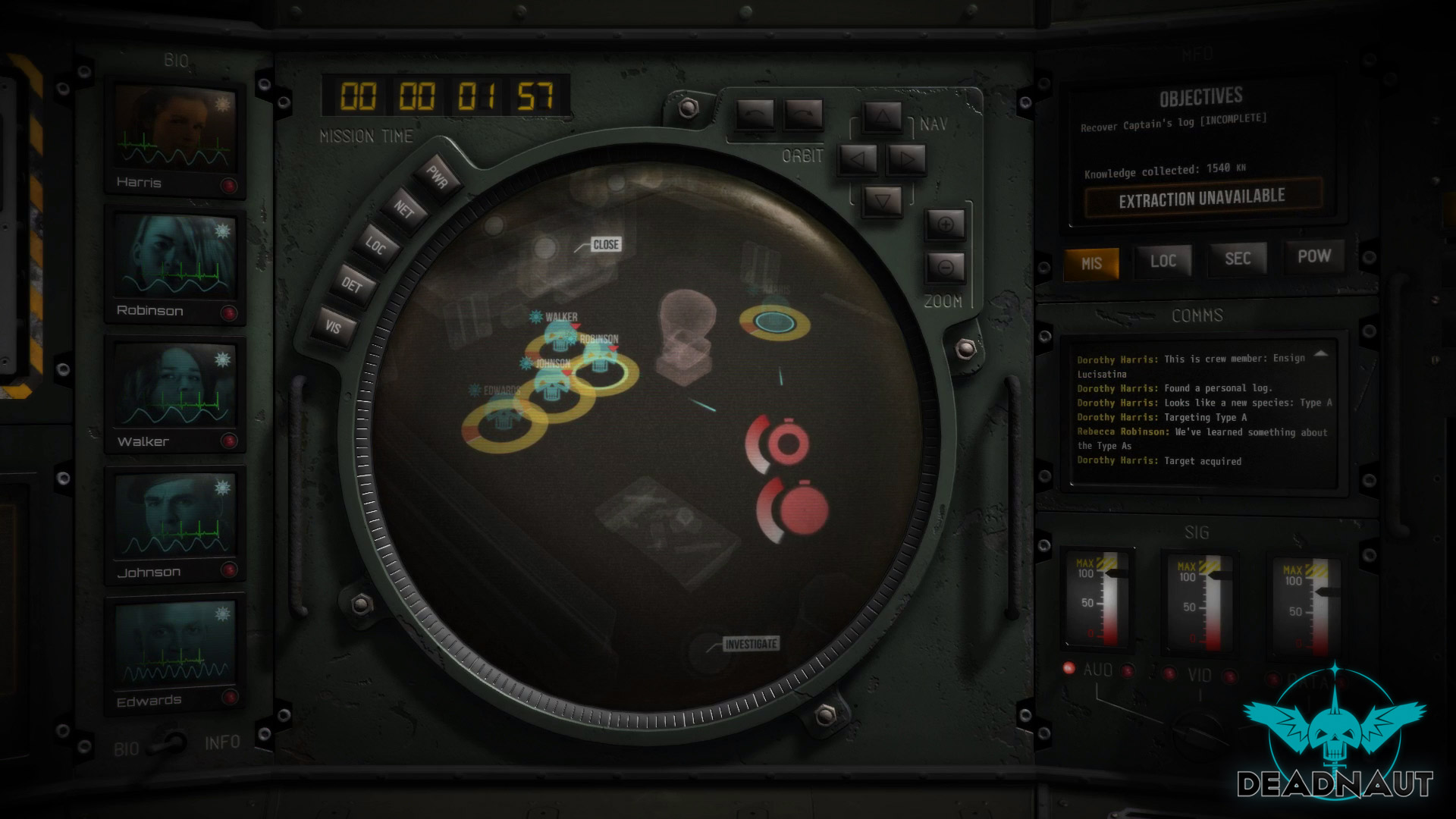
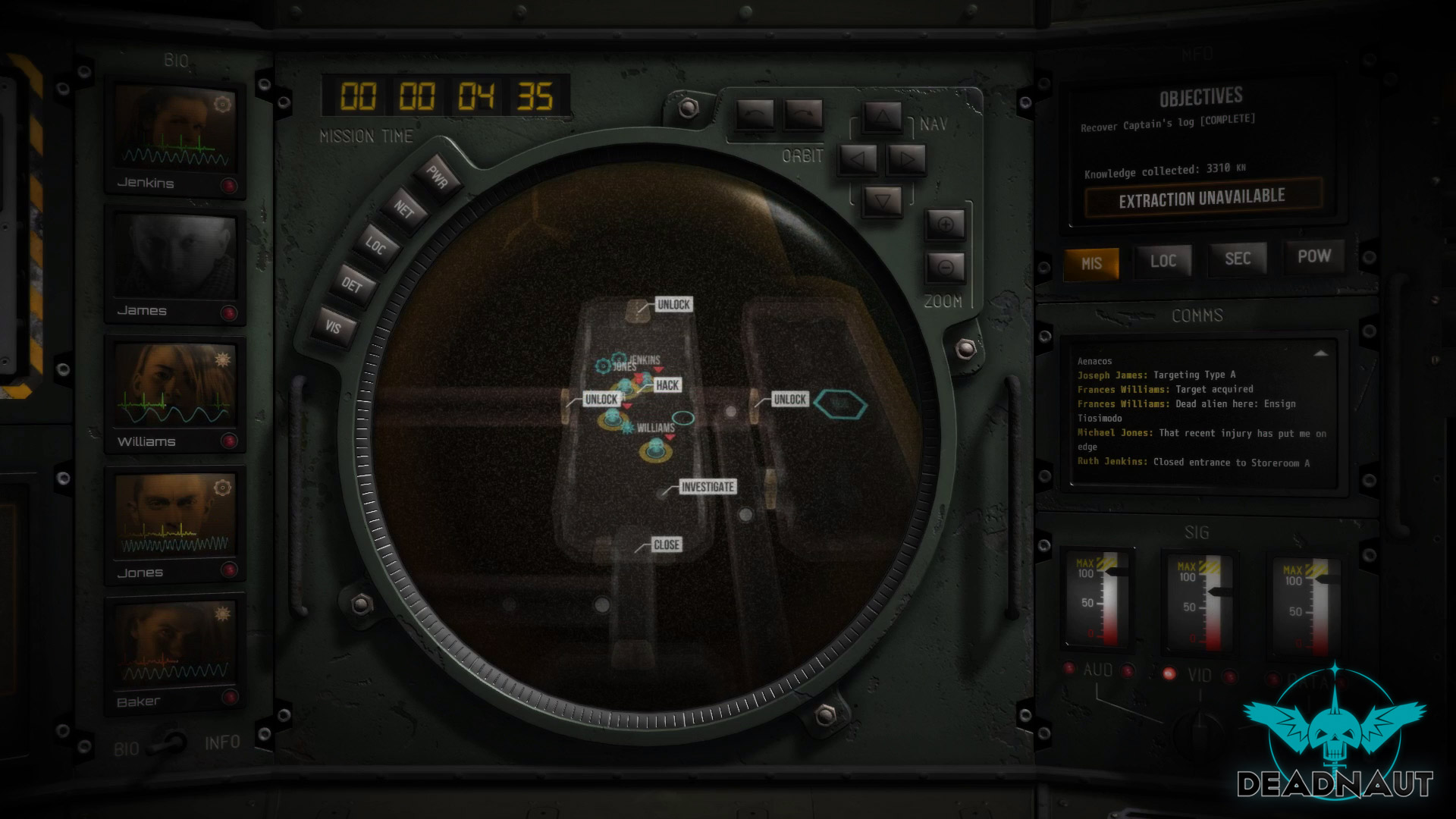
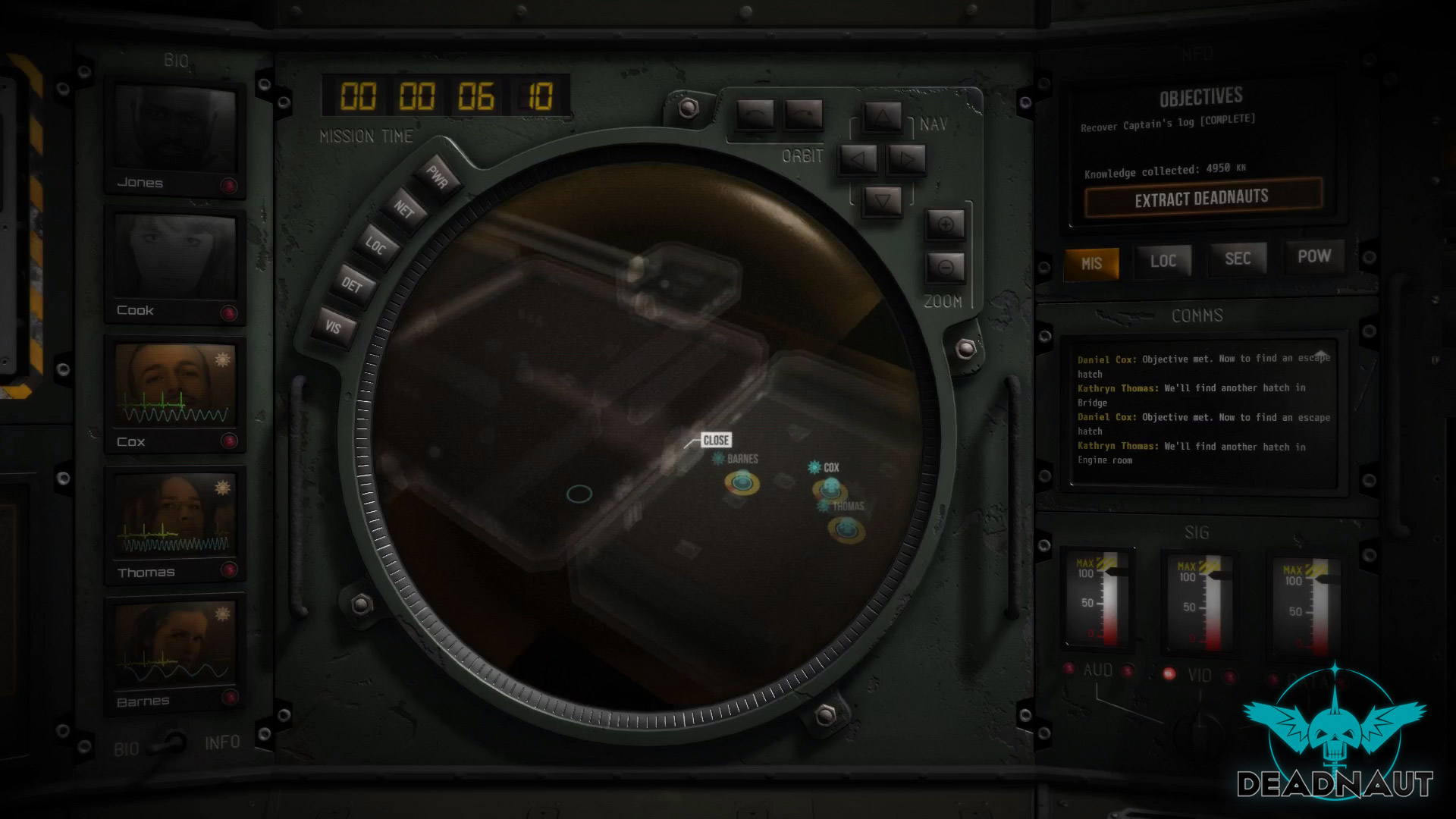
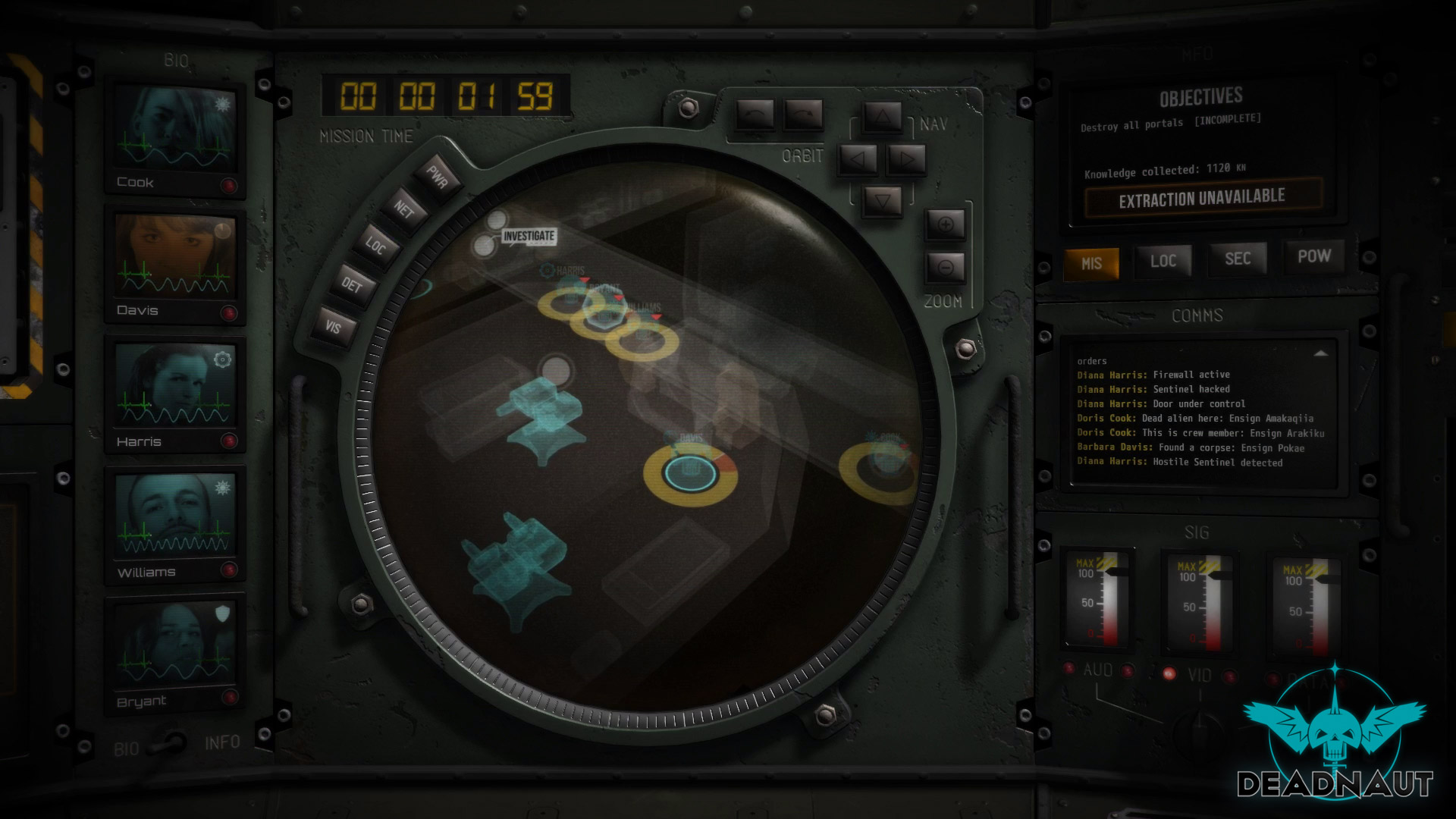
- Squad-based tactics: Control five complex characters as they explore, investigate and fight their way through each mission.
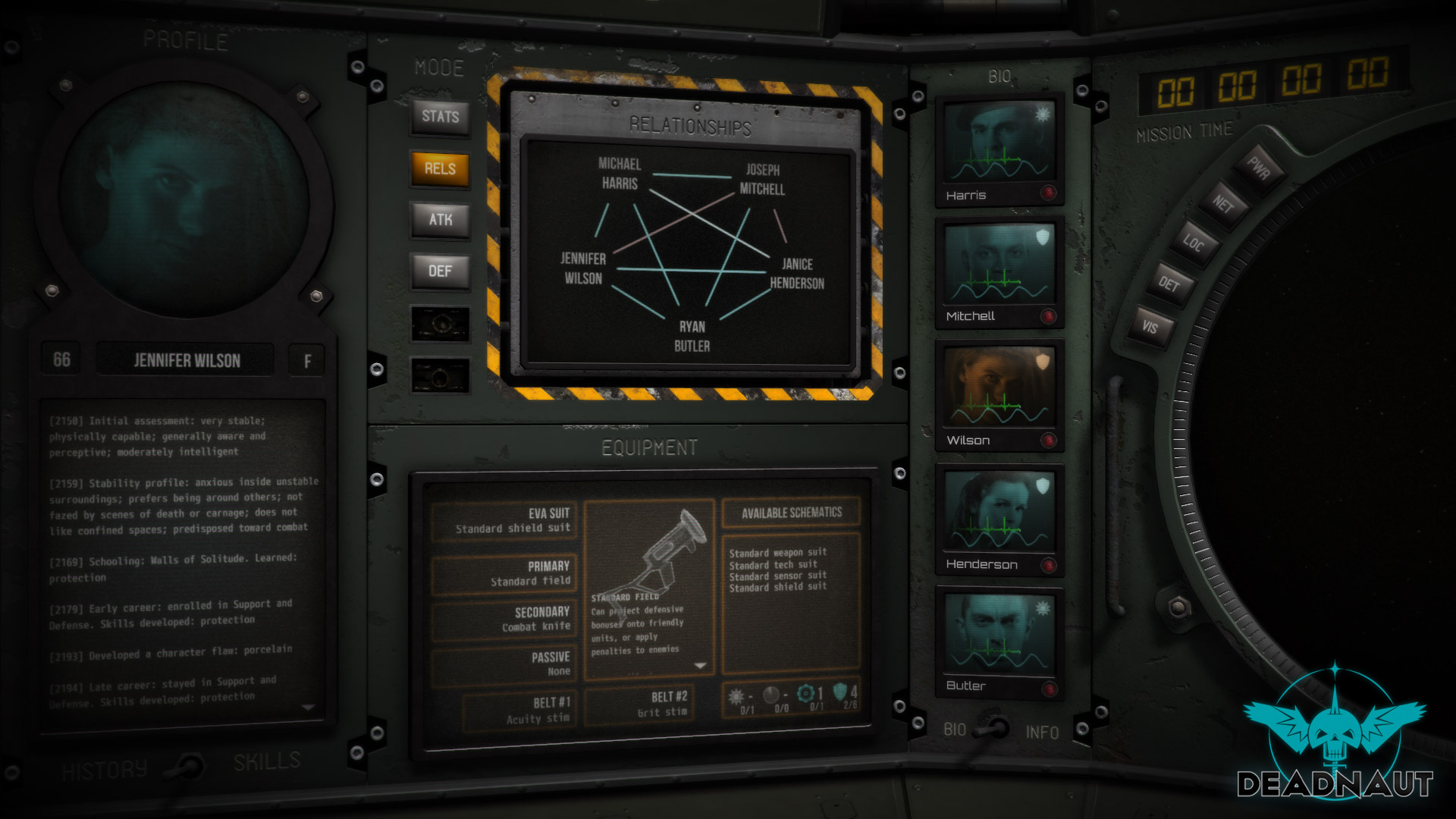
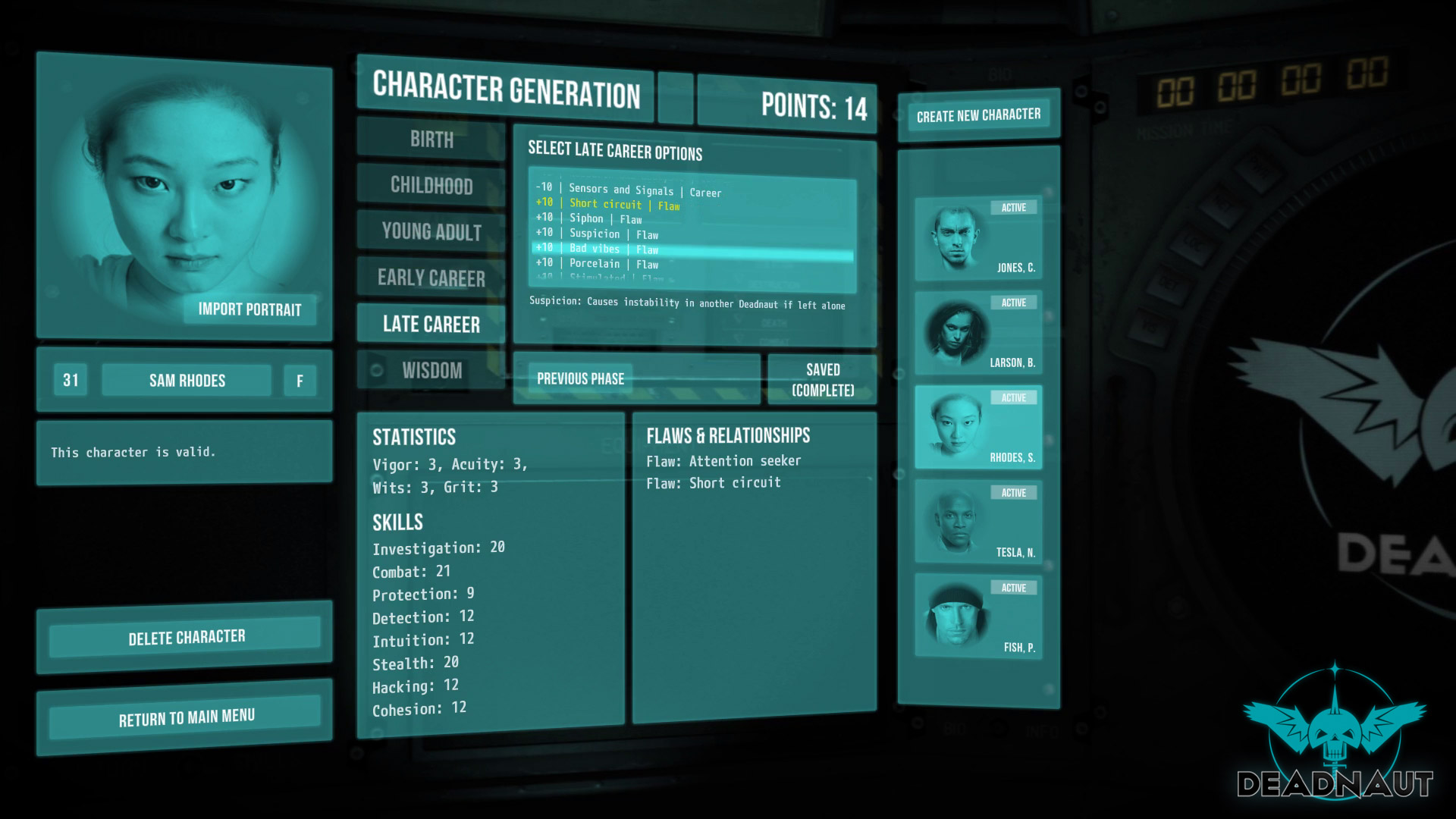
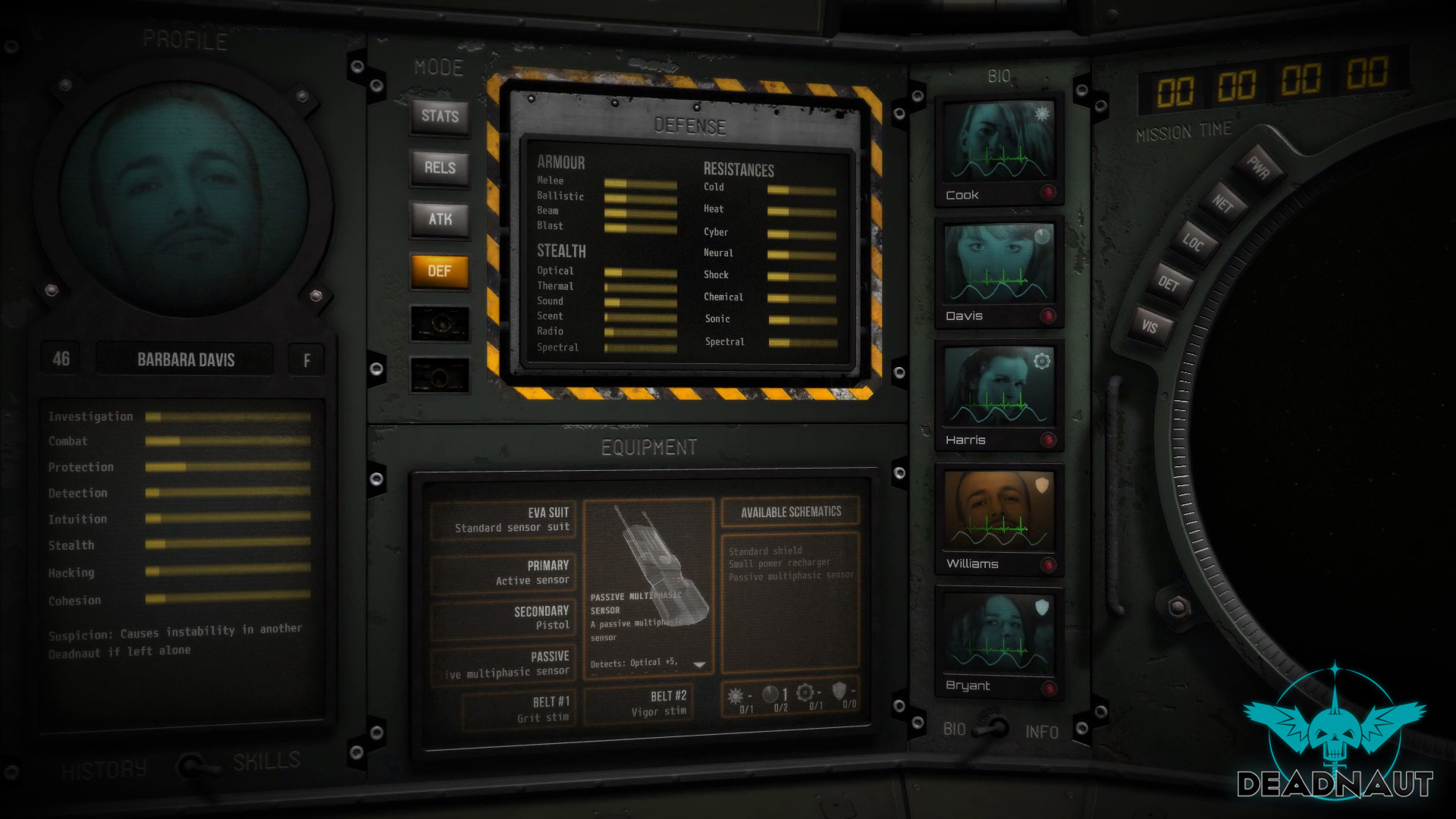
- Character generation: Create back stories for your team, mould their relationships and equip them well.
- Every game is unique: Dynamically-generated missions and campaigns ensure no two mysteries are the same.
- Flexible and complex: Adapt to your situation with an arsenal of weapons and shields, or use stealth, hacking and sensors to move unnoticed.
- Out of control: Deadnauts have their own fears, motivations and dispositions. Stay in charge, keep in contact, don’t let them out of your sight.
And more…
Deadnaut: Signal Lost announced, wishlist on Steam today!
2021.11.01
The cosmos is tearing itself apart. Wrecks of long-dead starships are full of horrible, interdimensional creatures. The dead roam surfaces of moons, and you’re being hunted by technically advanced soldiers.
Welcome to Signal Lost, Screwfly Studios’ return to Deadnaut’s grim and ruthless future.
While Deadnaut: Signal Lost is situated in the same universe as the original and features similar, mission-based gameplay in procedurally-generated locations, it is not a direct sequel.
You play the role of a remote handler who controls the action “at a distance” via a physical console, however, Signal Lost is focused on a single Deadnaut, rather than a squad.
The action is more intimate and tactical, and you can develop your Deadnaut with numerous suit upgrades and abilities. Furthermore, the gameplay is turn-based, not real-time, which helps focus the action.
We’ll have more to reveal in the coming weeks and months, but for now, head over to the Steam page and wishlist Signal Lost to keep up-to-date as development progresses.
Fear Equation: Now Out On Steam And GOG
2016.01.15
If you’ve been anticipating the release of our latest game Fear Equation on Steam or GOG, your chance to venture into the fog is here! The game is now out on both sites and to celebrate, we’re having a 25% off sale for a limited time.
Fear Equation is a genre-spanning horror strategy title where no two games are the same. The world is covered in a mysterious fog. Most who enter the fog disappear, and those who survive say it brings their nightmares to life.
You are The Engineer and you’re in control of a very special train. Will you rescue survivors and keep them safe from their nightmares? Can you lead them to salvation?
There’s only one way to find out…
Join The Nightmare Train With Fear Equation’s First Trailer
2015.11.09
With the release of Fear Equation drawing closer, what better time to show you more of the game — this time in video form! Here’s our first trailer, featuring various snippets of gameplay including rigging the lottery, scavenging missions, course plotting and driving the train, as well as a peek at a few of the fear manifestations themselves.
In addition, here’s a list of features you’ll see the final game:
- Send passengers out into the fog to investigate locations, find survivors and bring back supplies
- Manage defenses, power and resources. But be careful: if you aren’t the saviour they need, they’ll revolt against you
- Handle disputes between carriage leaders that can end in dramatic events that swing the balance of power between your defenders and detractors
- Monitor your passengers’ dreams to discover what kind of horrors will attack the train – and how to defeat them
- Create your own Engineer with perks and flaws that determine your train’s starting conditions, as well as the course the game will take
- Do your best to avoid the military as they seek to eliminate anyone caught in the fog
- Interact with intricate machines and devices within a richly detailed, fully 3D cabin
If you’d like to stay up-to-date with developments, be sure to follow us on Facebook and Twitter.
Deadnaut is Screwfly Studios’ second game and follow up to cult hit, Zafehouse: Diaries.
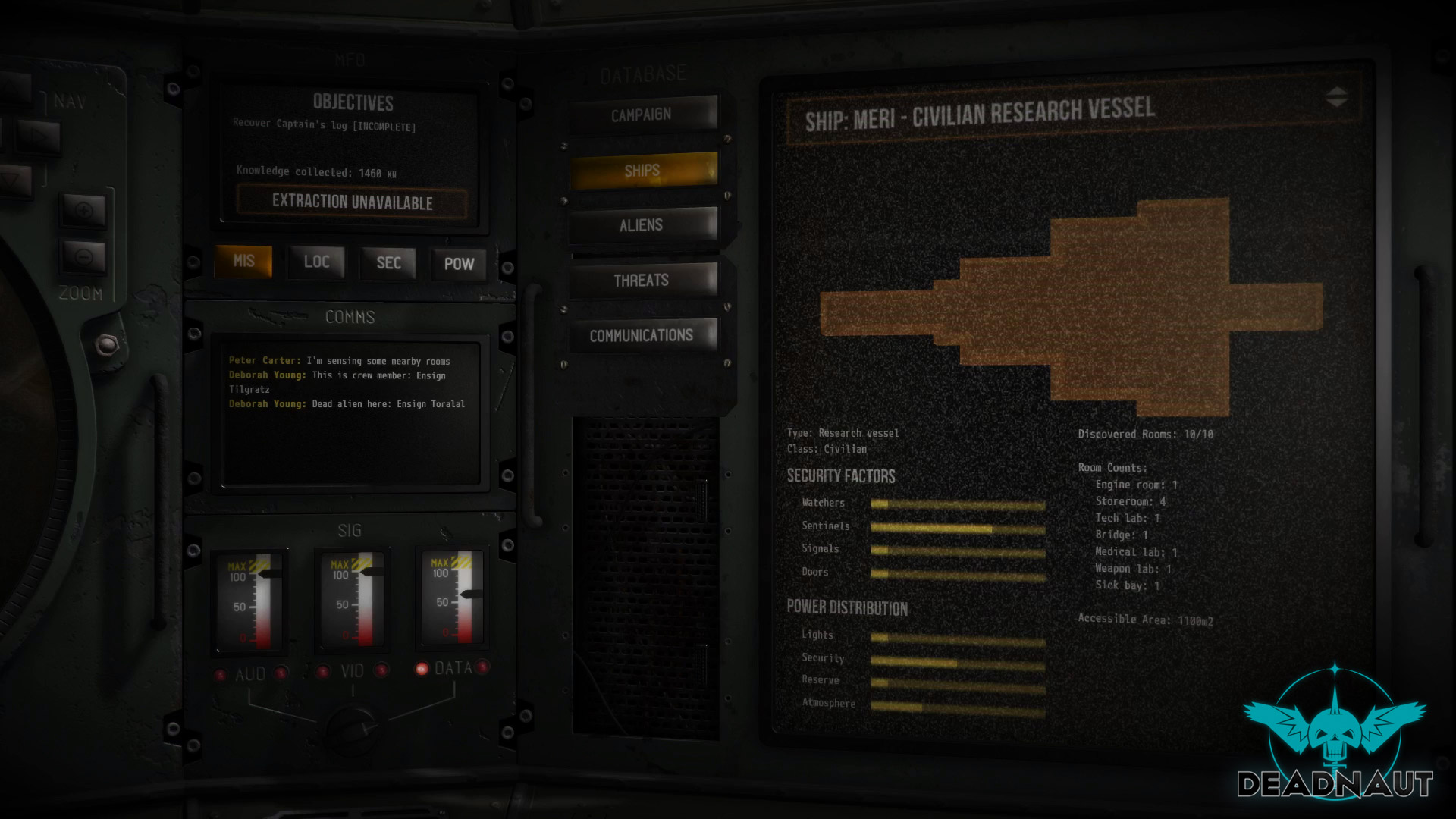
Deadnauts, so named because they’re unlikely to return, must explore, investigate and fight their way through the derelict ships of dead civilisations. Every mission is unique and no two locations are the same. Each ship contains mysterious enemies and hostile security systems.
Manage your Deadnauts’ skills, talents, relationships and flaws – and you might get them out alive.
Real-time tactics
Deadnaut is a challenging game. Not all strategies will work all the time. Instead, you’ll need to equip your squad with the right tools, maximise your Deadnauts’ respective talents, and adjust your approach when things go wrong.
Play it your way
There are many ways to play
Deadnaut. You can focus on combat and offense with a heavily armed crew, or go quietly with sensors, cloaks and shields. Use randomly generated Deadnauts, or fine-tune your crew with the character generator. It’s your call.
Something always goes wrong
Maybe you’ll get lucky and your plan will go smoothly. Or maybe Johnson’s short-circuited everyone’s suits and no-one has any power and something’s just about to burst through the door. Just remember: your Deadnauts aren’t perfect. The game is about planning and
adapting.
Remote control
You control your squad from a remote location. But the signals being sent to and from your Deadnauts are vulnerable to attack from the remote security system. Losing your signals can can leave your Deadnauts isolated and out of control, so do whatever you can to keep the security system off your back.
Custom characters
Use the intuitive character generator to craft your perfect squad. Choose their stats, their education and their specialties. But you might want to think twice about creating a powerful squad – your Deadnauts develop flaws as they become more skilled.
Stay tuned.
Latest update
The most recent version of Deadnaut is:
v1.3.1 (released March 31, 2016)
If you bought Deadnaut via Steam
As long as you haven’t disabled automatic updates for the game, it should already be patched to the latest version.
If you bought Deadnaut directly from us
To update any older version of the game, please download the appropriate patch for your platform using the links below:
Download latest update (Windows)
Download latest update (Mac OS X)
Note to Mac OS X users: You will need to install Mono in order to run the update. The latest version of Mono for OS X can be downloaded here.
Before applying the update, make sure Deadnaut is not running.
Patch notes
v1.3.1, March 31, 2016 (latest)
v1.3.0, November 5, 2015
v1.2.3, January 6, 2015
v1.2.2, December 22, 2014
v1.2.1, December 16, 2014
v1.2.0, December 12, 2014
v1.1.0, December 5, 2014
v1.0.1, December 1, 2014
System requirements
These are the minimum specifications your system must meet in order to run Deadnaut. The game may be able to run on older hardware, but we can’t provide support for these configurations.
Windows
- Windows XP, Vista, 7 or 8
- Intel Core 2 Duo 2.2GHz or AMD Athlon 64 X2 5000
- NVIDIA or AMD/ATI graphics card with 1GB RAM, with support for Direct3D 9 and Shader Model 3.
- 2GB system RAM
- 250MB hard drive space
- 1024 x 768 resolution or greater
The Windows version of the game also supports Direct3D 11, and will almost always perform better on hardware and platforms that support it.
Mac
- Mac OS X 10.7 or later
- Intel Core 2 Duo
- NVIDIA or AMD/ATI graphics card with 1GB RAM
- 2GB system RAM
- 250MB hard drive space
- 1024 x 768 resolution or greater
Linux
- Ubuntu 12.04 or later
- Intel Core 2 Duo
- NVIDIA or AMD/ATI graphics card with 1GB RAM
- 2GB system RAM
- 250MB hard drive space
- 1024 x 768 resolution or greater
Get Deadnaut!
Deadnaut is available from a number of online stores, including GOG and Steam. You can also purchase the game directly from Screwfly Studios, which will get you a standalone installer, as well as a Steam key.
Choose an option below to be taken to the appropriate store page.